

A lower emergency plumbing call-out fee does not settle which quote costs less once labour is included. Does the fee cover attendance alone, or some work too? Are applicable surcharges included in the amount being compared? Start by asking each provider to explain the same items: attendance, included labour, further time and additional charges.
For a household comparing emergency plumber costs, the immediate task is to define what each price buys. The comparison should also cover billing increments, any extras and what remains undecided. A worked example below shows how a lower opening fee can produce a higher total under explicitly stated assumptions.
Establish what the first payment covers
Before comparing amounts, the person booking should ask for a breakdown of the proposed charge. Useful questions include: what is payable for attendance, how much labour is included, and when does further billing begin?
The answer should distinguish the initial payment from the price of the proposed repair. Rather than assume that an attendance fee covers diagnosis, repair work or materials, the household can ask the provider to specify each inclusion. Anything left undecided should remain a question, rather than becoming an assumed part of the deal.
A written comparison can use four entries for each offer: initial charge, included minutes, subsequent labour rate and additional charges. Leave unanswered entries marked as questions. This keeps an incomplete offer from being treated as a complete price.
The next check concerns how the business communicates those charges before a booking.
Check the total and applicable fees
The Australian Competition and Consumer Commission’s price-display guidance says businesses must communicate clear and accurate prices before consumers book, order or purchase. Businesses must display a total price including taxes, duties and unavoidable or pre-selected extra fees. The guidance also says weekend and public-holiday surcharges must follow the applicable display rules.
For the household, a practical question is: “Does this amount include every fee that applies to this proposed visit?” Follow that with specific questions about the day, time and proposed payment method. Ask whether each charge is already included, separately payable or still to be determined.
The ACCC also advises consumers comparing online prices to add all charges together, rather than focus only on the advertised amount. Its guidance describes drip pricing as extra charges emerging during an online purchasing process. That supports checking the combined amount before accepting an offer, without assuming that every separately stated charge is improper.
Price disclosure and price comparison are separate tasks. Once the applicable charges are clear, the household still needs to establish how much labour each offer includes. Two clearly explained offers can cover different amounts of work.
Compare the included labour time
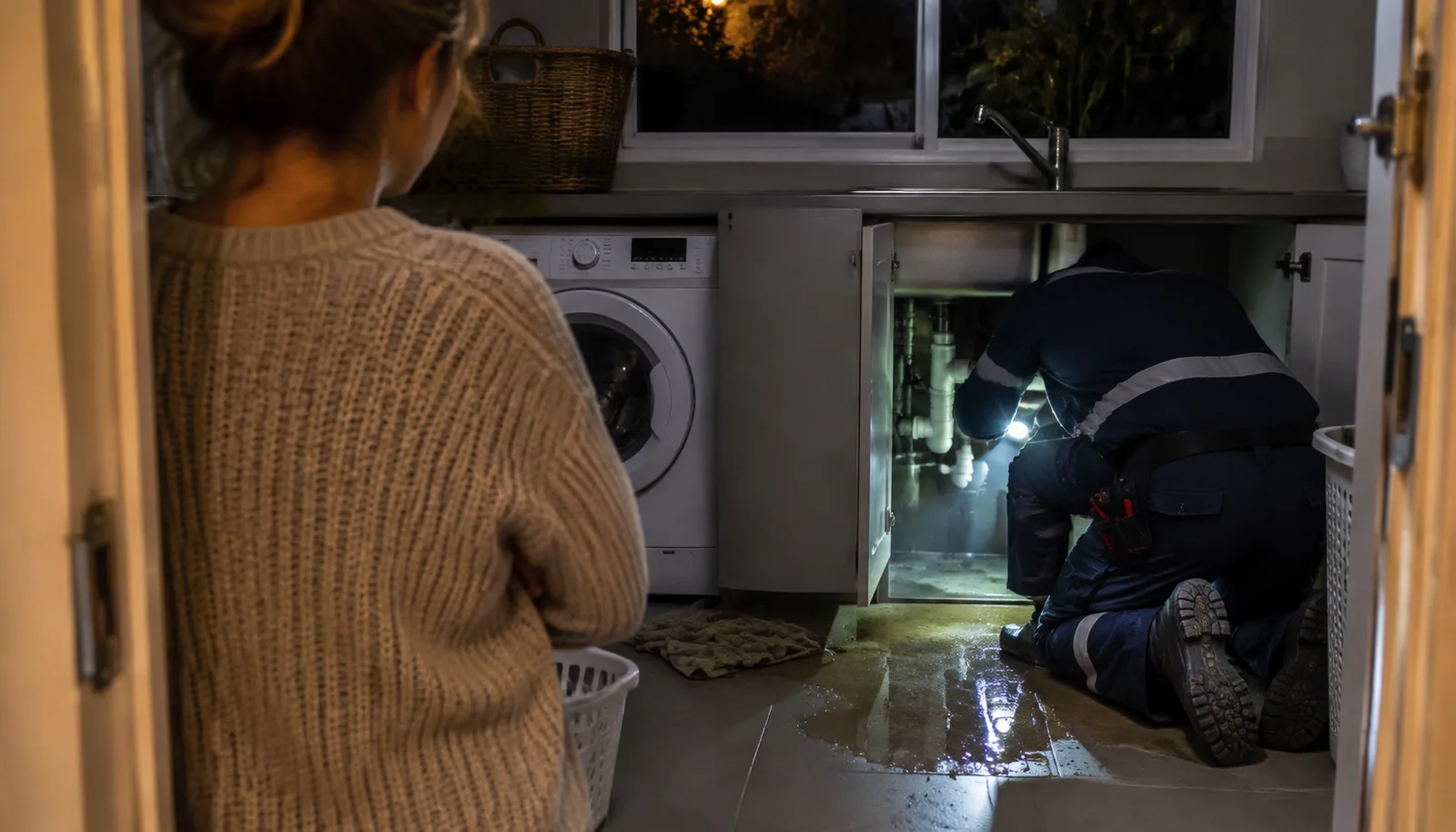
When comparing emergency plumbing fees, ask how much labour the initial charge covers and what rate applies after any included time ends. In its emergency plumbing cost article, 24hr Emergency Plumber Brisbane advises asking whether the fee includes the first 30 or 60 minutes. It explains that some plumbers charge a call-out fee plus labour from arrival, while others include the first hour in one fixed charge. Clarifying that distinction helps you compare what each opening payment covers before considering charges for additional time.
The included-time question needs a billing question alongside it. Ask whether additional time is charged proportionately, in specified blocks or as a full hour. Record the provider’s answer rather than assuming that an hourly rate means a charge calculated by the minute.
Consider this hypothetical comparison. Every amount and billing condition below is invented solely to demonstrate the arithmetic; none is a quoted or observed market price.
- Provider A charges $180 for attendance, with no labour included, plus $120 per hour billed proportionately from arrival.
- Provider B charges $260 including the first hour, then $120 per hour billed proportionately.
- Both hypothetical offers exclude materials and have no other charges.
For 30 minutes of work, A totals $240 and B totals $260. For 60 minutes, A totals $300 and B remains $260. At 90 minutes, A totals $360 and B totals $320.
Under these assumptions, the lower attendance fee wins the shorter comparison but loses the longer ones. The example does not predict the duration or price of an actual repair. It shows why the opening fee alone cannot answer the cost question.
For an actual comparison, use the quoted billing rules and ask the provider which duration, if any, can reasonably be estimated before assessment.
Separate agreed charges from unresolved work
After checking time charges, the household should ask what work the proposed price covers. Request a description of the task, any included materials and any items whose price remains undecided. Avoid filling those gaps with assumptions about what a quoted visit must include.
A useful request is to separate agreed amounts from estimates and unpriced items. For example, a hypothetical proposal might specify an attendance charge while leaving the repair price for assessment. In that situation, ask what the attendance payment buys and what decision follows the assessment.
Before authorising work, the household can also request an explanation of how proposed additions will be presented for approval. Ask what happens if the assessment identifies work outside the original description. These are questions to settle with the provider, rather than promises to infer from the first price.
When comparing another offer, use the same description of the requested work. Record differences in scope beside differences in price. A comparison that lists only dollar amounts leaves those differences unanswered.
Restate the agreement before accepting
A final check is to read the proposed arrangement back in plain language: the attendance amount, included labour, billing start, subsequent rate, billing increments and applicable extras. Ask for any corrections in writing.
Then check the unresolved items separately. Has the provider explained what requires assessment? Is there a proposed price for that assessment? What further decision will be requested before additional work proceeds?
The household’s final question should be concrete: “What is payable for the work being authorised now, and what remains subject to a separate decision?”